Alignment of mind, body and world
Many of us do this as a daily ritual … or even a twice-daily ritual. Some of us cannot manage every day, and fit it in where and when we can. Many of us perhaps have good intentions but another week goes past and we still haven’t found the time or opportunity. Some of us, living in the middle of a city and surrounded by buildings, feel that it’s impossible.
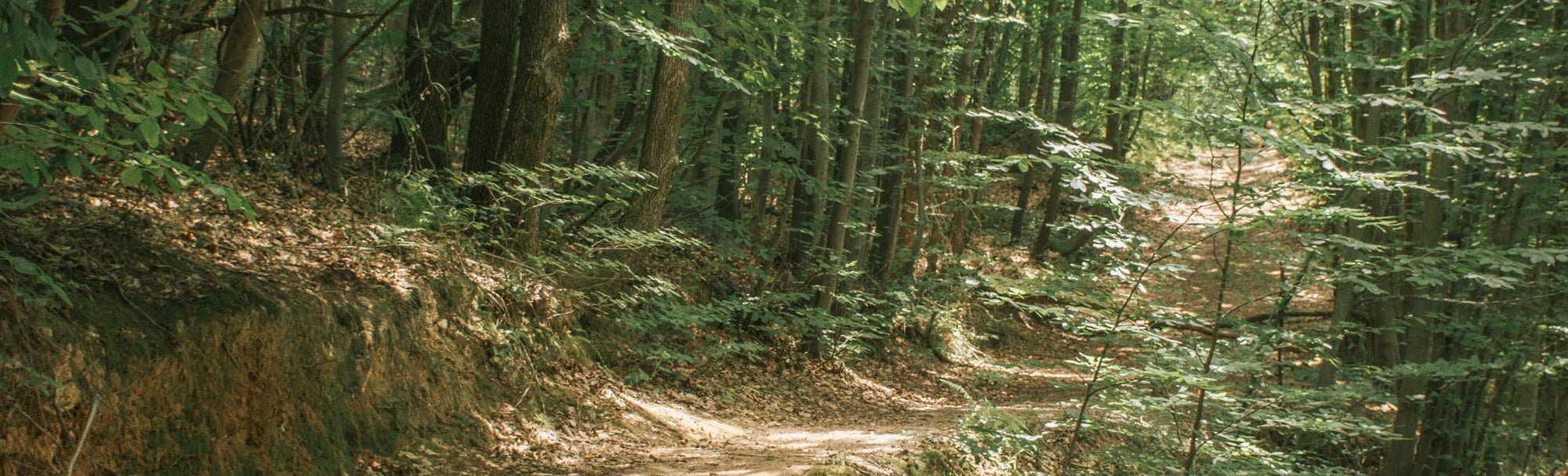
But a daily walk in nature may not “just” be a walk but a powerful reinforcement of our spiritual, psychological and physical wellbeing, and its interdependency with everything around us. Whether on soil or shoreline, through parkland, botanical garden, desert or bush, a walk invokes the interaction of mind, muscle and motion with a receptive and responsive outdoor world.
In a famous poem called “Corsons Inlet” about a walk along the wild coast of New Jersey, poet A.R. Ammons (1926–2001) observes: “in nature there are few sharp lines.” The fluid, organic contours of the natural world, the poem suggests, gift us with the opportunity to relax and re-align our souls and selves, and to allow nature to flow in and reclaim us.
Indeed, the poem’s speaker finds his body’s movement through the dunes releases him from his mind’s constraints, from “the perpendiculars, / straight lines, blocks, boxes, binds / of thought” into a softer, yet no less attentive consciousness of “the hues, shadings, rises, flowing bends and bends / of sight.” By contrast, philosopher Jean-Jacques Rousseau (1712–1778) declares: “I can only meditate when I am walking. When I stop, I cease to think; my mind only works with my legs.”
Whatever a walk means for you—escape from thought, a means to solve a problem, a meditation—let nature guide you through. Choose your timing. Every sensory experience will be particularly powerful at the liminal moments of dawn or dusk when the light changes. We are reminded of the Earth’s journey around our solar system and how our circadian (from the Latin words for ‘about’ and ‘day’) rhythms respond to that cycle: how our bodies observe their own myriad rituals, governed by physiology and nature.
Meredith Little and the late Steven Foster, co-founders of the School of Lost Borders, suggest: “the day walk is a journey upon the face of the earth, a ceremony of preparation, a pilgrimage through the mirror of nature. In the natural world, signs and symbols of your inward journey are reflected.” Their spiritually-based approach advocates the natural world be a mirror and a teacher for the self, and that the walk is taken with: “a mindful attention to the how, why, and what of one’s inner life, and how they relate to the outer world.”
Accept nature’s gift. If circumstance dictates you have to follow the same path each day, you will never be treading the same steps. For, as Ammon’s poetic speaker concludes his ramble along Corsons Inlet, he welcomes the realisation: “that there is no finality of vision / … I have perceived nothing completely / … tomorrow a new walk is a new walk.”
Sources
“Corsons Inlet” A. R. Ammons https://www.poetryfoundation.org/poems/43073/corsons-inlet
Wanderlust: a History of Walking by Rebecca Solnit
https://schooloflostborders.org/